Running Facebook and Instagram ads can bring a steady flow of enquiries. But getting a lead is only the beginning. If your team takes too long to respond, misses messages, or forgets to follow up, your ad budget can produce leads without producing enough sales.
For many Indian businesses, customers expect quick responses, especially when they enquire through WhatsApp. A lead that is interested today may be comparing prices, competitors, and offers tomorrow.
That is why lead follow-up needs to be treated as part of your advertising funnel, not as a separate sales task.
1. Your Leads Are Not Reaching the Right Person
One of the most common causes of missed leads is unclear ownership.
Imagine a customer enquires about a ₹50,000 service. The lead arrives in a shared spreadsheet or inbox, but nobody knows who should contact the person. Two salespeople assume the other person is handling it.
By the time someone checks, the customer may have moved on.
How to fix it
Create a simple lead-routing process:
-
Capture the lead automatically.
-
Record the source, such as Facebook or Instagram.
-
Assign the lead to a specific salesperson.
-
Notify the salesperson.
-
Set the next follow-up action.
-
Track whether the lead was contacted.
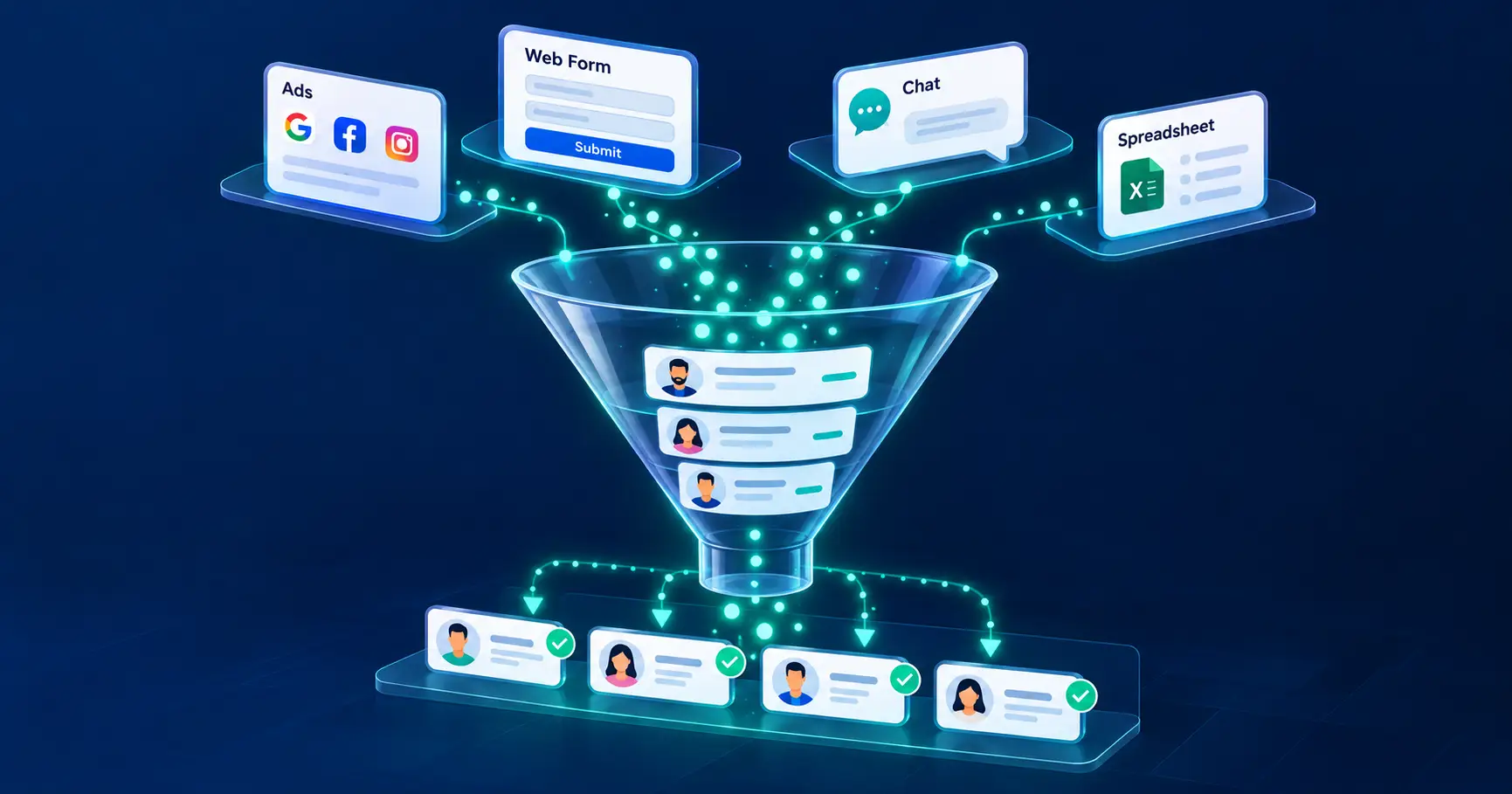
Aronity supports lead capture from sources such as ads, forms, website widgets, APIs, and Excel imports. Its team and workflow capabilities can help businesses organise ownership instead of depending entirely on manual handoffs.
Explore the lead management and CRM features to see how this process can be organised in one place.
2. Slow Response Time Is Costing You Opportunities
Speed to lead matters because customer intent can change quickly.
Someone who submits an enquiry while actively comparing products is more likely to engage when the business responds promptly. If the first response comes hours later, the customer may already be talking to another business.
What a better workflow looks like
Instead of:
Ad → Lead → Spreadsheet → Salesperson notices → Calls later
Aim for:
Ad → Lead captured → Assigned → Notification → First response → Follow-up
The goal is not simply to respond quickly. The goal is to make the response process repeatable.
For example, a coaching business can capture an enquiry, assign it to an admissions counsellor, send an appropriate WhatsApp response, and create a follow-up task.
3. Your Team Is Managing Leads Across Too Many Places
A lead may start on Instagram, continue on WhatsApp, get discussed in a team group, and then end up in an Excel file.
This creates fragmented information.
A salesperson may know that a customer asked for pricing on WhatsApp, while another team member only sees the original form submission. Important context gets lost.
Bring the conversation closer to the lead
A WhatsApp shared inbox can help sales teams keep customer conversations organised while making it easier for team members to see who is handling each enquiry.
With Aronity, businesses can manage WhatsApp conversations alongside lead information instead of relying on disconnected processes.
This becomes especially useful for businesses where customers prefer WhatsApp for questions, pricing discussions, product information, appointments, and follow-ups.
4. Your Follow-Up Process Depends on Memory
A salesperson may promise:
“I will send you the details tomorrow.”
But tomorrow becomes Monday. Monday becomes Wednesday. Eventually, nobody remembers the conversation.
This is a classic source of lead leakage.
Turn promises into tasks
A better process is to create a clear next action after every meaningful interaction.
For example:
|
Lead stage |
Next action |
|
New enquiry |
Respond immediately |
|
Product information sent |
Follow up after the agreed period |
|
Price shared |
Check decision status |
|
Interested |
Schedule next conversation |
|
Not ready |
Add to appropriate campaign |
|
No response |
Continue structured follow-up |
Workflows can help automate reminders and repetitive actions so salespeople do not have to remember every follow-up manually.
The important point is simple: your CRM should remember the next step even when your salesperson is busy.
5. You Stop After the First Message
A common mistake is treating “sent a message” as “followed up.”
A customer may not respond to the first message because they are working, travelling, comparing options, or simply forgot.
That does not automatically mean they are not interested.
Build a follow-up sequence
A practical sequence could look like this:
Day 0: Acknowledge the enquiry and answer the main question.
Next follow-up: Share useful information such as pricing, product details, availability, or an offer.
Later follow-up: Ask whether the customer still needs help.
Final follow-up: Give the customer an easy way to continue or pause the conversation.
The exact timing should depend on your product and buying cycle. A ₹1,000 purchase and a ₹10 lakh property enquiry should not have the same follow-up process.
Aronity workflows and campaigns can help teams create more consistent customer follow-up instead of relying entirely on manual reminders.
6. You Cannot See Where Leads Are Getting Stuck
If you only look at ad clicks and lead counts, you may think your marketing is working perfectly.
But what happens after the lead arrives?
You need to understand where enquiries move—or stop.
Track the complete journey
Review questions such as:
-
How many leads were captured?
-
How many were assigned?
-
How many received a first response?
-
How many were followed up?
-
How many became qualified opportunities?
-
Which sources generate better-quality enquiries?
-
Which salespeople have the most pending follow-ups?
-
Where are leads remaining inactive?
A dashboard makes these questions easier to review because sales and marketing teams can look at the process instead of isolated spreadsheets.
Aronity provides dashboards and reporting tools designed to give teams visibility into lead activity and performance.
7. Your Ad Promise and Sales Follow-Up Do Not Match
Sometimes the problem starts before the salesperson even contacts the lead.
For example, an ad says:
“Get a Free Consultation Today.”
But after submitting the enquiry, the customer receives a generic message asking:
“How can I help you?”
There is a disconnect.
The customer expects a consultation, but the sales conversation starts from zero.
Create a connected customer journey
Your ad, form, first response, and sales conversation should make sense together.
If the ad promotes a specific service, the salesperson should know:
-
Which campaign generated the enquiry
-
What product or service interested the customer
-
What information was requested
-
Which team member owns the lead
-
What the next action should be
This context can make conversations more relevant and reduce unnecessary back-and-forth.
A Simple Framework to Stop Missed Leads
Before increasing your advertising budget, audit what happens after someone becomes a lead.
Use this checklist:
-
Every lead has a defined source.
-
Every lead is assigned to an owner.
-
New leads trigger a clear notification.
-
Your team has a defined first-response process.
-
Follow-ups have specific next actions.
-
Customer conversations are organised.
-
Old and inactive leads are reviewed regularly.
-
Campaign and sales performance are visible.
-
Your ad promise matches the sales experience.
If several boxes are unchecked, adding more ad spend may simply create more leads for the same broken process.
How Aronity Can Help
Aronity is an all-in-one CRM built around WhatsApp for small and mid-sized businesses.
Instead of managing every enquiry manually, teams can bring lead capture, WhatsApp conversations, workflows, campaigns, team roles, and reporting into a more organised process.
For example:
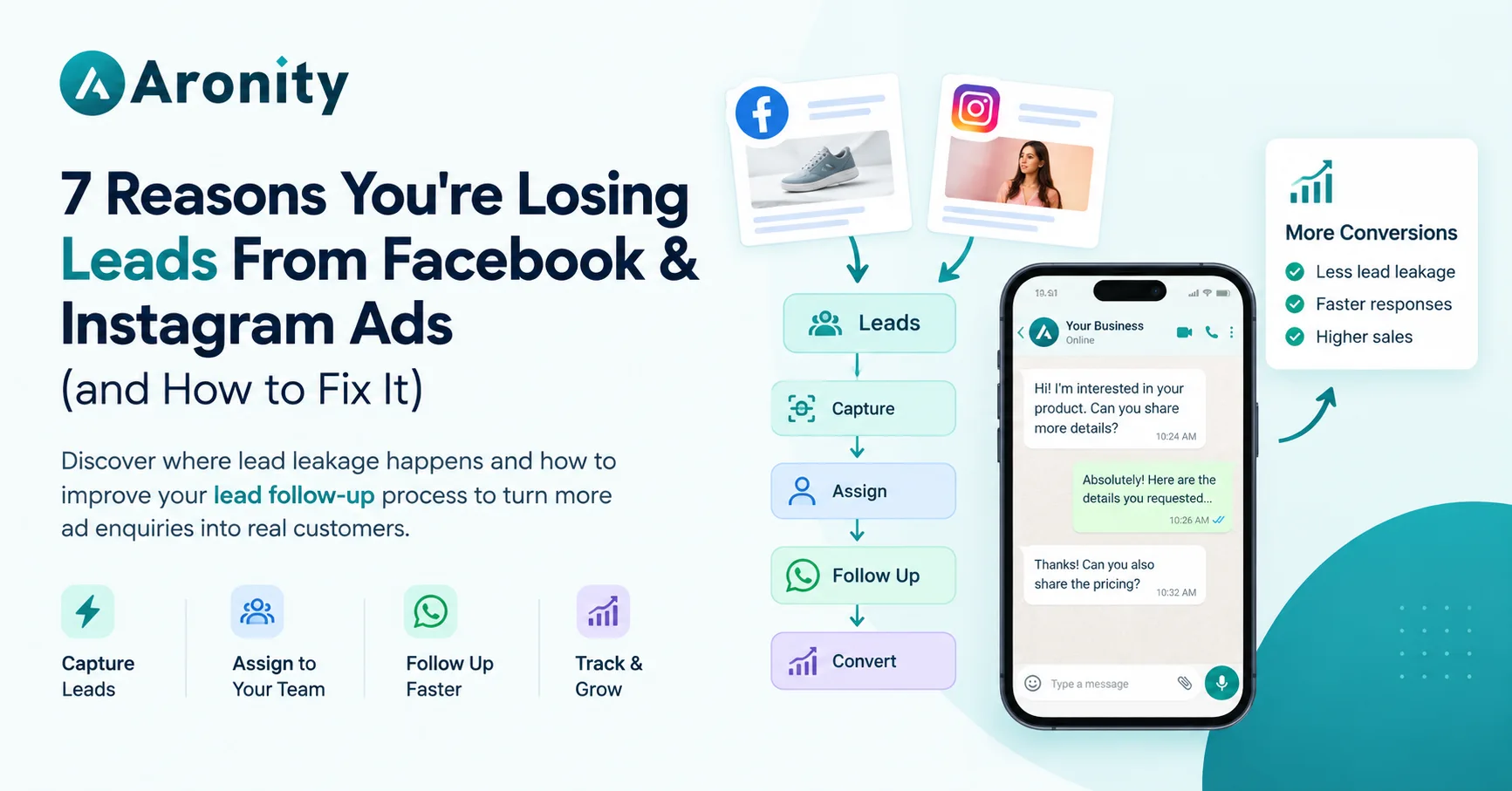
Facebook/Instagram ad → Lead capture → Assignment → WhatsApp conversation → Workflow → Follow-up → Dashboard
The exact setup depends on your business process, but the principle is the same: reduce the number of opportunities that depend on someone remembering what to do next.
You can also review Aronity's CRM plans and 7-day free trial before deciding whether it fits your sales process.
FAQ
1. Why are Facebook and Instagram leads not converting?
Leads may fail to convert because of slow responses, unclear ownership, weak follow-up, disconnected customer conversations, or poor lead qualification. The issue is not always the ad itself. Review the complete journey from lead capture to first response and subsequent follow-ups.
2. What is lead leakage?
Lead leakage happens when a potential customer enters your sales process but is not properly captured, assigned, contacted, or followed up. Common causes include spreadsheets, unclear responsibilities, missed WhatsApp messages, delayed responses, and forgotten follow-up tasks.
3. How can businesses improve speed to lead?
Start by reducing manual steps between lead capture and sales contact. Automatically capture enquiries where possible, assign them to the right salesperson, notify the owner, and create a clear first-response workflow. The goal is to make fast response a process rather than an individual habit.
4. How often should sales teams follow up with leads?
There is no universal follow-up schedule. It should depend on the product, purchase value, urgency, and customer behaviour. A useful approach is to agree on the next action after every interaction and use reminders or workflows so promising leads do not become forgotten leads.
5. Can a CRM reduce missed leads?
A CRM can reduce missed leads by organising lead information, ownership, conversations, tasks, workflows, and reporting in one system. It does not replace a good sales process, but it can make that process easier to follow consistently across a growing team.
Conclusion
Facebook and Instagram ads do not automatically create sales. They create opportunities. Your lead follow-up process determines what happens next.
If leads are sitting in spreadsheets, waiting for assignment, receiving late responses, or disappearing after one message, the real problem may be the process behind your advertising.
Start by finding where lead leakage happens. Improve speed to lead, define ownership, organise WhatsApp conversations, automate repetitive follow-ups, and track what happens after every enquiry.
If your business wants a more organised way to capture and manage ad-generated leads, Aronity can help bring the process together.
- #lead follow-up
- #lead leakage
- #missed leads
- #speed to lead