Getting leads is only the first step towards growing a business. The real challenge is turning those leads into paying customers. Without a clear process, businesses often miss follow-ups, lose track of conversations, and let valuable sales opportunities slip away.
Learning how to Build a Sales Pipeline helps you organise every sales opportunity, manage customer interactions, and move prospects towards a purchase with a structured approach.
What Is a Sales Pipeline and Why Does Your Business Need One?
A sales pipeline is a step-by-step process that shows where each potential customer stands in your sales journey. It helps your team understand which leads are new, which prospects need follow-ups, and which opportunities are close to becoming customers.
A well-organised sales pipeline makes it easier to:
-
Track leads from the first enquiry to the final purchase.
-
Identify prospects who need immediate attention.
-
Maintain consistent communication with potential customers.
-
Reduce missed enquiries and delayed follow-ups.
-
Understand which sales activities are generating results.
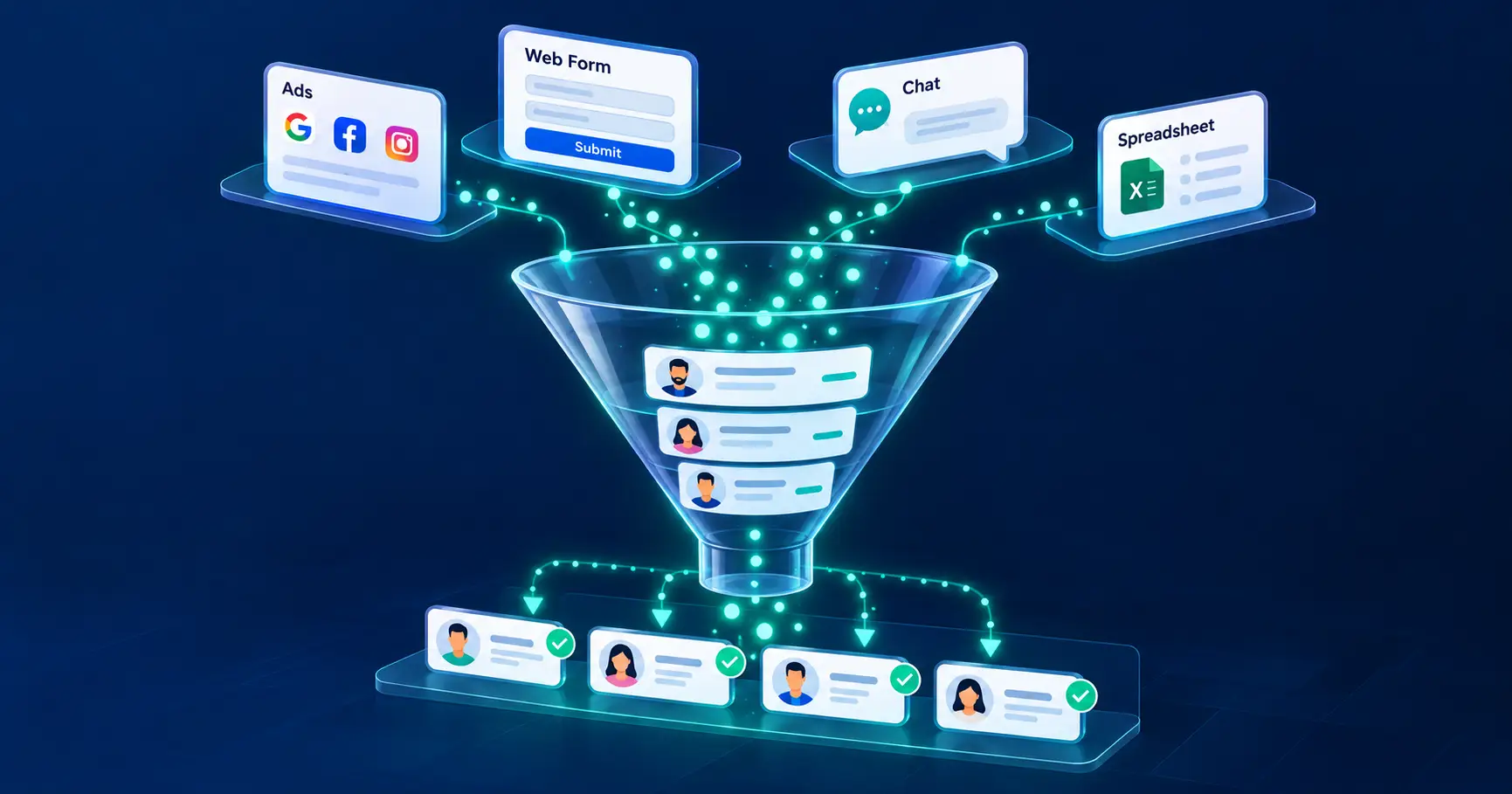
For businesses that sell through WhatsApp, managing enquiries across multiple conversations can become difficult. A CRM helps bring leads, conversations, campaigns, and follow-ups together in one place.
1. Identify Your Ideal Customers
Before building your pipeline, understand who you want to sell to. Not every enquiry is a potential customer, so identifying your ideal audience helps your team focus on relevant opportunities.
Start by defining:
-
Target audience: Who is most likely to purchase your product or service?
-
Customer needs: What problems are they trying to solve?
-
Budget: Can they afford your offering?
-
Buying preferences: Do they prefer WhatsApp conversations, phone calls, or meetings?
-
Decision-making process: Who makes the final purchase decision?
For example, a coaching institute may receive WhatsApp enquiries from students interested in different courses. By understanding their preferred course, budget, and admission timeline, the sales team can prioritise serious prospects.
This makes your sales pipeline more focused and improves the quality of your sales conversations.
2. Define Your Sales Pipeline Stages
Clear sales pipeline stages help your team understand what action to take next for every lead. Instead of managing all enquiries in the same way, divide the sales process into manageable steps.
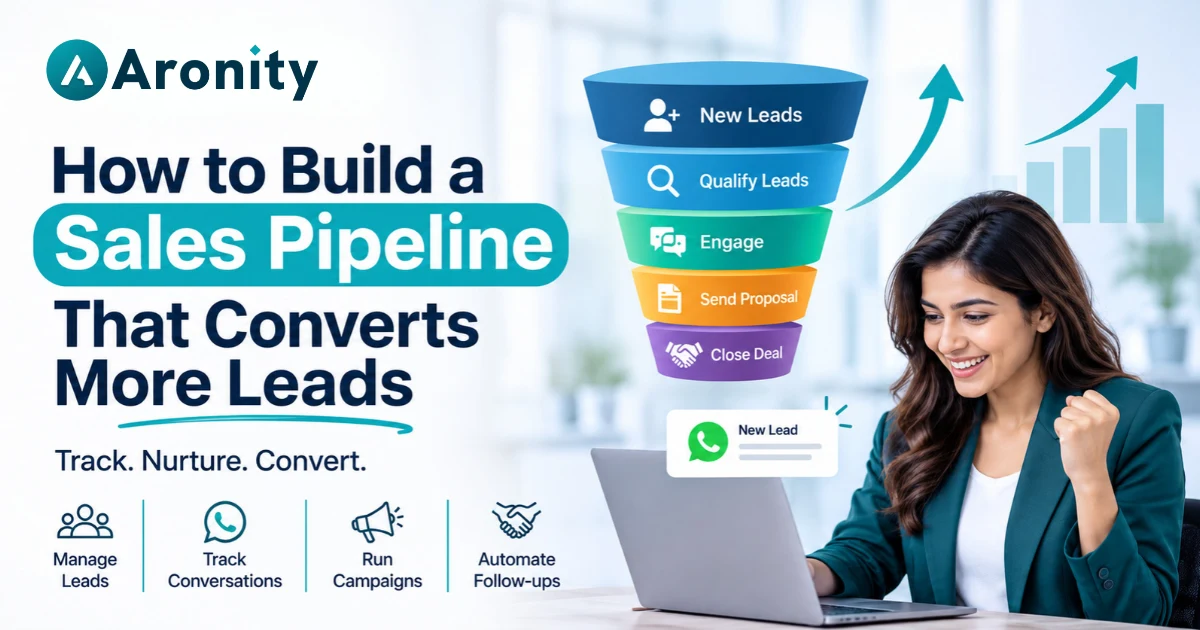
Here are six common stages:
1. New Lead: A potential customer contacts your business through WhatsApp, a website form, an advertisement, or another channel.
2. Lead Qualification: Your sales team checks the prospect's requirements, budget, interest, and purchasing timeline.
3. Initial Conversation: The team shares relevant information, answers questions, and understands the customer's needs.
4. Offer or Proposal: You provide pricing, product details, quotations, or a customised solution.
5. Follow-Up and Negotiation: You address concerns, answer additional questions, and follow up with interested prospects.
6. Closed-Won or Closed-Lost: The prospect either becomes a customer or decides not to proceed.
Keep these stages simple and relevant to your business. A complicated pipeline can make it harder for employees to update lead information consistently.
3. Focus on Lead Tracking and Follow-Ups
One of the biggest reasons businesses lose sales opportunities is inconsistent follow-up. A prospect may show interest today but need more time before making a purchase.
Without proper lead tracking and follow-ups, your sales team may forget to contact that person again.
Create a simple follow-up process:
-
Record every new enquiry in your CRM.
-
Assign each lead to a responsible team member.
-
Add notes about customer requirements and previous conversations.
-
Set reminders for upcoming follow-ups.
-
Track the outcome of every interaction.
For example, if a customer asks about your pricing but does not purchase immediately, schedule a follow-up to check whether they need additional information.
A CRM for sales pipeline management makes this process easier by keeping customer details and conversation history organised.
With Aronity, businesses can manage WhatsApp leads, conversations, and follow-ups from one platform instead of depending on scattered chats and spreadsheets.
4. Use Lead Conversion Strategies That Build Trust
Generating enquiries does not guarantee sales. Your team needs a consistent approach to understand customer needs and guide prospects towards the right decision.
Here are some practical lead conversion strategies:
Understand before selling: Ask relevant questions to identify what the customer actually needs instead of immediately promoting your product.
Respond promptly: Acknowledge new enquiries and provide helpful information without unnecessary delays.
Personalise conversations: Use the customer's name, requirements, and previous interactions to make communication more relevant.
Address objections: Explain pricing, features, benefits, and limitations clearly when customers have concerns.
Provide clear next steps: Encourage interested prospects to book a demo, request a quotation, schedule a call, or complete their purchase.
Avoid sending repeated promotional messages without considering the customer's interest. Helpful communication builds more trust than aggressive selling.
5. Automate Your Sales Pipeline and Save Time
As your business grows, manually managing every enquiry and follow-up becomes difficult. Sales pipeline automation helps reduce repetitive work and keeps your team organised.
You can automate different parts of your sales process, such as:
-
Assigning incoming leads to sales representatives.
-
Sending initial responses to new enquiries.
-
Setting reminders for pending follow-ups.
-
Organising leads based on their current pipeline stage.
-
Managing WhatsApp campaigns for relevant customer segments.
For example, when a new customer sends a WhatsApp enquiry, your team can capture the lead, assign it to a sales representative, and ensure that the enquiry receives attention.
Aronity helps businesses manage WhatsApp conversations, campaigns, leads, and follow-ups in one place. This makes it easier for sales teams to maintain communication without constantly switching between different tools.
Automation should support your sales team, not replace meaningful conversations. Keep personal interactions wherever customers need individual assistance.
6. Monitor Your Pipeline and Improve Sales Conversions
Building a pipeline is not a one-time activity. You need to review its performance regularly to understand what is working and where potential customers are dropping off.
Focus on these areas:
-
Lead volume: How many new enquiries are coming into your business?
-
Qualified leads: How many enquiries match your ideal customer profile?
-
Conversion rate: How many prospects eventually become customers?
-
Follow-up activity: Are sales representatives contacting interested prospects on time?
-
Lost opportunities: Why are potential customers deciding not to purchase?
For example, if many prospects request quotations but very few complete their purchases, review your pricing communication, follow-up process, and how clearly your team explains product value.
Use these insights to improve your sales funnel management and make practical changes to your process.
You can also explore how businesses organise their internal processes through healthcare workflow automation, which highlights the importance of structured workflows and better coordination.
Real-Life Example: How a Business Can Improve Its Sales Pipeline
Imagine a coaching institute receiving enquiries through WhatsApp advertisements.
Initially, its sales team manages conversations manually. Some enquiries receive quick responses, while others get missed. There is no central record of interested students or pending follow-ups.
The institute introduces a structured sales pipeline:
-
New student enquiries are recorded in a CRM.
-
Sales representatives contact students to understand their course preferences.
-
Qualified leads receive course details and fee information.
-
Follow-up reminders are created for students who need time to decide.
-
Interested students are guided through the admission process.
With a CRM like Aronity, the institute can organise WhatsApp leads, conversations, and follow-ups in one place.
The result is a more organised sales process, better visibility into opportunities, and fewer enquiries getting overlooked.
Frequently Asked Questions
1. What are the main stages of a sales pipeline?
The main stages generally include new lead, lead qualification, initial conversation, proposal, follow-up or negotiation, and closed-won or closed-lost.
2. How does CRM help with sales pipeline management?
A CRM helps businesses organise customer information, track leads, manage conversations, assign responsibilities, and schedule follow-ups. It provides better visibility into the entire sales process.
3. How can I improve my sales conversion rate?
Focus on qualifying leads, responding promptly, understanding customer needs, personalising communication, addressing objections, and following up consistently.
4. Why is sales pipeline automation important?
Sales pipeline automation reduces repetitive tasks, helps teams manage enquiries efficiently, and makes it easier to track pending opportunities and follow-ups.
Conclusion
A well-structured sales pipeline helps businesses manage enquiries, build stronger customer relationships, and convert more prospects into paying customers. From identifying ideal customers to tracking leads, automating follow-ups, and monitoring performance, every stage plays an important role in improving sales outcomes.
If your business handles multiple enquiries through WhatsApp, the right CRM can make sales pipeline management easier and more organised.
Explore Aronity and see how you can manage leads, conversations, campaigns, and follow-ups in one place. Start your 7-day free trial or book a demo today.
- #Sales Pipeline Management
- #Lead Management
- #Sales Conversion
- #WhatsApp CRM
- #Sales Automation